Pregnancy asks a lot of a body. Your center of gravity shifts, your low back and hips take on new work, and rest gets harder to come by right when you need it most. A lot of my prenatal clients come in simply wanting an hour to feel comfortable and cared for. That's a completely good reason to book.
Before anything else, the most important sentence in this whole article: talk to your OB, midwife, or healthcare provider before scheduling prenatal massage, especially if your pregnancy is considered high-risk or you've had any complications. Massage is generally well-tolerated during a healthy pregnancy, but your provider knows your situation and I don't. Get their okay first, and everything below will make more sense.
When people usually start
Many people begin prenatal massage in the second trimester, once early pregnancy has settled in. Some providers are comfortable with it earlier and some prefer to wait — this is exactly the kind of thing to confirm with yours. There's no prize for starting sooner; the right time is whenever you and your provider decide it is.
You can also come in right up through the third trimester, when the aches tend to be at their loudest and a chance to lie down comfortably is worth a great deal.
What prenatal massage actually feels like
The biggest difference from a regular massage is positioning. As your pregnancy progresses, lying flat on your stomach isn't comfortable or appropriate, and lying flat on your back for long stretches isn't ideal later on either.
So prenatal massage is usually done side-lying, propped and supported with pillows and bolsters — under your head, between your knees, wherever you need it — so your body is fully cradled and nothing is straining to hold a position. Many people are surprised by how comfortable it is; for some it's the most relaxed they've been all week, because they're finally supported from every side.
The work itself is gentler and more nurturing than a deep tissue session. The aim is comfort and ease — softening the tension that builds in your low back, hips, shoulders, and neck as your body adapts. It should feel soothing, never intense.
Where the tension usually shows up
Every pregnancy is different, but a few areas tend to speak up as the months go on, and they're where I spend most of a session:
- Low back and hips. As your center of gravity moves forward, your low back and hips work overtime to keep you balanced. This is the number-one thing people come in for.
- Neck and shoulders. Longer, more tired days and less comfortable sleep have a way of collecting right across the top of your shoulders.
- Legs and feet. Later on, your legs are carrying more and doing more. Gentle work here often just feels wonderful.
I keep pressure light to moderate throughout, and there are certain areas and techniques I'll ease off of or skip during pregnancy as a matter of course. You don't need to memorize any of that — knowing your therapist works within those boundaries is exactly why you see someone who offers prenatal massage rather than booking a standard deep tissue session.
What I'll ask you (and what to tell me)
When you book a prenatal massage, let me know you're pregnant and roughly how far along you are — it shapes the whole session. Before we start, I'll also ask about:
- How you've been feeling, and where you're carrying the most discomfort.
- Any complications, conditions, or anything your provider has flagged.
- Positions that feel okay and positions that don't.
None of this is nosy — it's how I keep the session safe and genuinely comfortable for you. And if something doesn't feel right at any point during the massage, tell me immediately and we'll adjust. That goes double during pregnancy.
If you've never had a massage with me before, my walk-through of what to expect at a first visit covers parking, draping, and the rest, so there are no surprises.
A few honest limits
I want to be straight with you about what massage is and isn't. Prenatal massage is a comfort measure — a way to rest, ease everyday tension, and feel taken care of. It is not a treatment for any medical condition, and it doesn't replace anything your provider recommends.
If you have swelling that's sudden or severe, pain that worries you, or any symptom your provider has told you to watch for, call them — not your massage therapist. I'd always rather you check in with your medical team than talk yourself into "it's probably just tension."
With that understood, an hour of supported, gentle rest can be a real kindness to give yourself during a demanding stretch of life.
Booking in the West Highlands
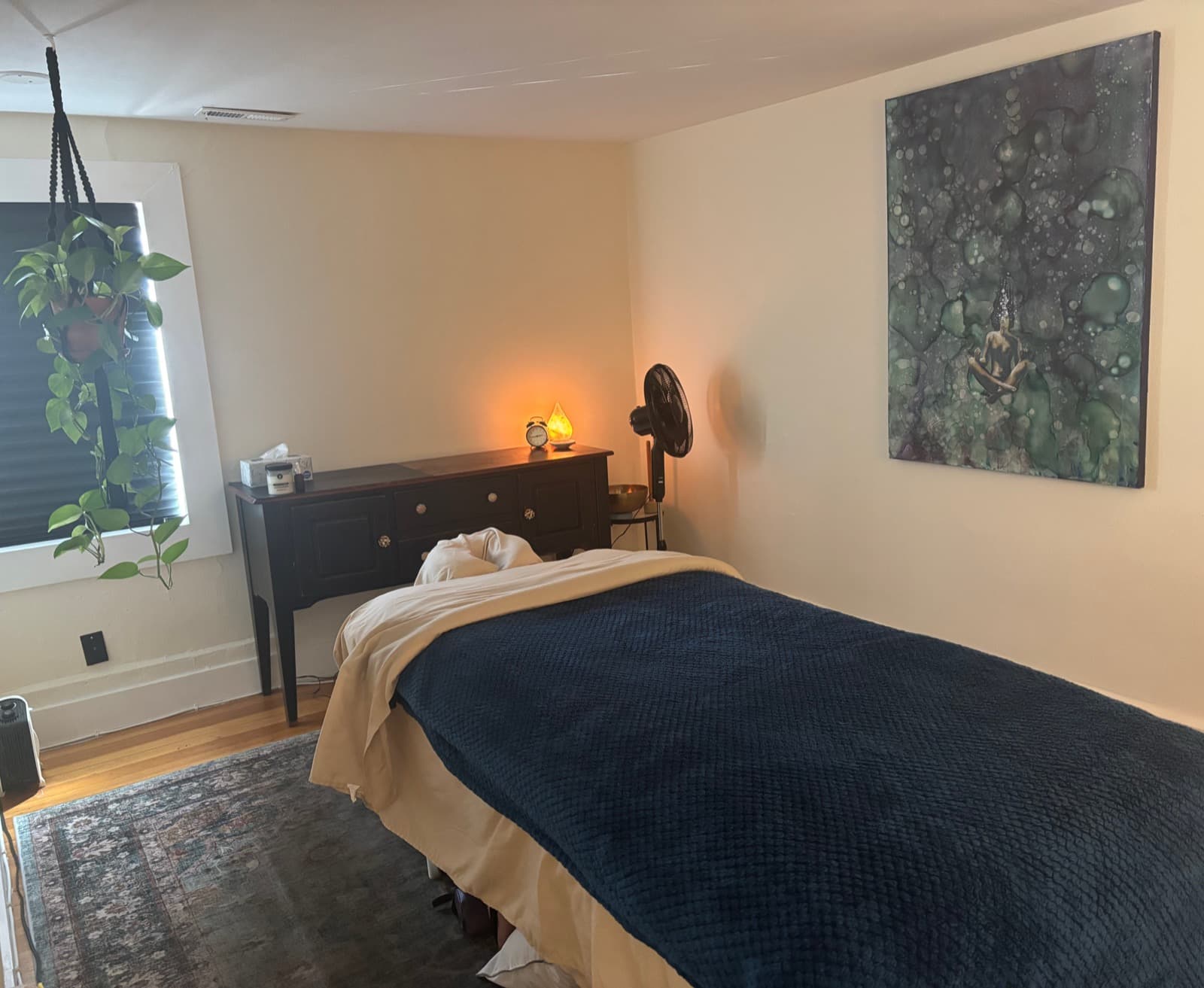
Frixtion Spa is a quiet, one-on-one studio in Denver's West Highlands — no bustling front desk, no rushing. It's just me, and your time is yours. That calm tends to matter even more when you're expecting.
If your provider has given you the go-ahead, I'd be glad to take care of you. You can book a prenatal session here, or reach out with any questions first — I'm happy to talk through how it works before you commit to a time.
This article is general information, not medical advice, and it isn't a substitute for guidance from your OB, midwife, or healthcare provider. Please clear prenatal massage with them before booking, and contact them directly about any symptom or concern during your pregnancy.